Integrating Retro Groovy Mayhem Lightning Bolt PNG into Modern Creative Workflows
The resurgence of 1970s aesthetics in contemporary graphic design has created a distinct niche for assets that blend nostalgia with modern digital utility. Among these, the Retro Groovy Mayhem Lightning Bolt PNG stands out as a versatile resource for designers, crafters, and small business owners. This specific digital asset combines the chaotic energy of "maximalist" retro trends with the clean functionality required for high-quality print production. Understanding how this file fits into broader design strategies requires an evaluation of its technical specifications, aesthetic versatility, and practical applications compared to other available resources.
Defining the Aesthetic and Technical Value
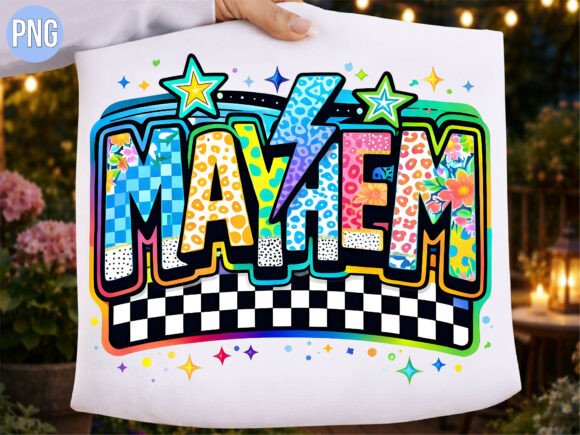
At its core, the Retro Groovy Mayhem Lightning Bolt PNG is not merely a clipart image; it is a pre-composed graphic element designed to reduce workflow friction. The term "groovy mayhem" refers to a specific stylistic approach characterized by warped typography, psychedelic color palettes, and dynamic shapes that evoke the counter-culture art of the late 60s and early 70s. The lightning bolt serves as a central anchor in this composition, providing a sharp, recognizable symbol amidst the softer, flowing lines typical of the era.
From a technical perspective, the value of this asset lies in its preparation. The file is delivered as a high-resolution PNG (Portable Network Graphics) at 300 DPI (dots per inch). This resolution is the industry standard for professional printing. Lower resolution files, often found in free online repositories, may appear crisp on a screen but result in pixelation or blurriness when printed on physical products like t-shirts or mugs. By offering a 300 DPI file with a transparent background, this design eliminates the need for manual background removal, a time-consuming step that can often compromise image quality if done incorrectly.
Comparing Digital Formats: PNG vs. Vector and JPEG
When evaluating digital design resources, creators often encounter three primary formats: JPEG, PNG, and SVG (vector). Understanding the tradeoffs between these formats helps determine when the Retro Groovy Mayhem Lightning Bolt PNG is the optimal choice.
- JPEG: While widely compatible, JPEGs do not support transparency. Using a JPEG version of this design would require the user to manually remove the white or colored background, risking jagged edges or halos around the intricate "mayhem" details. Furthermore, JPEGs use lossy compression, which can introduce artifacts in areas with sharp contrast, such as the edges of a lightning bolt.
- SVG (Vector): Vector files are infinitely scalable without quality loss, making them ideal for large-format signage. However, complex retro designs with textured effects, gradients, and distressed overlays often lose their character when converted to vectors. The "groovy" aesthetic frequently relies on raster-based textures that vectors cannot easily replicate without becoming overly complex and difficult to edit. For most Print on Demand (POD) applications, such as apparel and home goods, a high-resolution raster image is sufficient and often preferred for its visual fidelity.
- PNG: The PNG format strikes a balance by supporting lossless compression and full alpha-channel transparency. This ensures that the intricate details of the retro design remain sharp while allowing seamless integration onto any colored fabric or product surface. For the majority of POD projects, the 300 DPI PNG offers the best combination of quality and ease of use.
Practical Applications in Print on Demand
The versatility of the Retro Groovy Mayhem Lightning Bolt PNG makes it suitable for a wide array of Print on Demand products. However, successful implementation depends on matching the design's complexity with the appropriate substrate.
Apparel and Textiles
T-shirts, hoodies, and tote bags are primary use cases. The transparent background allows the design to be placed directly onto colored garments without visible rectangular borders. For dark fabrics, designers may need to add a white underbase in their printing software, but the high contrast of the lightning bolt ensures visibility. The "mayhem" elements surrounding the bolt provide a balanced composition that covers a significant chest area, making it ideal for front-center prints.
Hard Goods and Accessories
Items such as mugs, tumblers, and phone cases benefit from the high-resolution nature of the file. When wrapping a design around a cylindrical object like a tumbler, edge clarity is crucial. The 300 DPI specification ensures that the fine lines and textural details of the groovy style remain crisp even after the image is scaled to fit the curvature of the product. Stickers and decals also leverage the transparent background, allowing for die-cut shapes that follow the contour of the lightning bolt and surrounding graphics.
Paper Products and Stationery
Greeting cards, scrapbooks, and album covers offer another avenue for utilization. In these contexts, the design can be layered with other elements. Because the PNG supports transparency, it can be overlaid on textured paper backgrounds or combined with additional typography without obscuring underlying layers. This modularity is essential for creating unique, customized stationery collections.
Evaluating Limitations and Decision Factors
While the Retro Groovy Mayhem Lightning Bolt PNG is a robust resource, it is not a universal solution for every design scenario. Creators should consider several limitations before purchasing or integrating this asset.
Scalability Constraints: Unlike vector files, raster PNGs have a fixed maximum size. While 300 DPI is sufficient for most consumer goods, scaling this image to the size of a billboard or large wall mural would result in pixelation. If a project requires extreme enlargement, a vector alternative or a custom illustration may be necessary.
Editability: A PNG is a flattened image. Users cannot easily change the color of individual elements, adjust the font, or move specific parts of the "mayhem" composition without advanced photo editing skills and tools. If a project requires frequent color variations or textual changes, a layered PSD (Photoshop) or AI (Illustrator) file might be more appropriate, though these often come with a steeper learning curve and higher cost.
Software Compatibility: As noted in the file details, users must ensure their design software supports PNG files with transparency. Most modern design platforms, including Canva, Adobe Photoshop, Illustrator, and CorelDRAW, handle these files seamlessly. However, older or basic image viewers may display the transparent background as white or black, which can lead to confusion during the preview stage.
Strategic Integration for Small Businesses
For small business owners and independent creators, time efficiency is as valuable as aesthetic quality. The primary advantage of using a premium digital download like this is the reduction of production time. Instead of spending hours creating a retro-style illustration from scratch or sourcing multiple elements to composite a cohesive design, creators can immediately focus on product placement and marketing.
Moreover, the distinct style of the Retro Groovy Mayhem Lightning Bolt PNG helps brands tap into current market trends without sacrificing originality. The "groovy" aesthetic appeals to a broad demographic, ranging from Gen Z consumers who appreciate vintage revival styles to older demographics who resonate with genuine nostalgia. By utilizing a high-quality, professionally prepared asset, businesses can maintain a consistent brand image across various product lines, from apparel to home decor.
In conclusion, the decision to use this specific PNG file should be guided by the project's scale, the required level of customization, and the target medium. For standard Print on Demand applications where visual impact and ease of use are prioritized, this asset offers a compelling balance of style and technical reliability. However, for projects requiring infinite scalability or deep structural editing, creators should weigh these benefits against the limitations of raster graphics. By understanding these nuances, designers can make informed choices that enhance their creative output while optimizing their workflow efficiency.